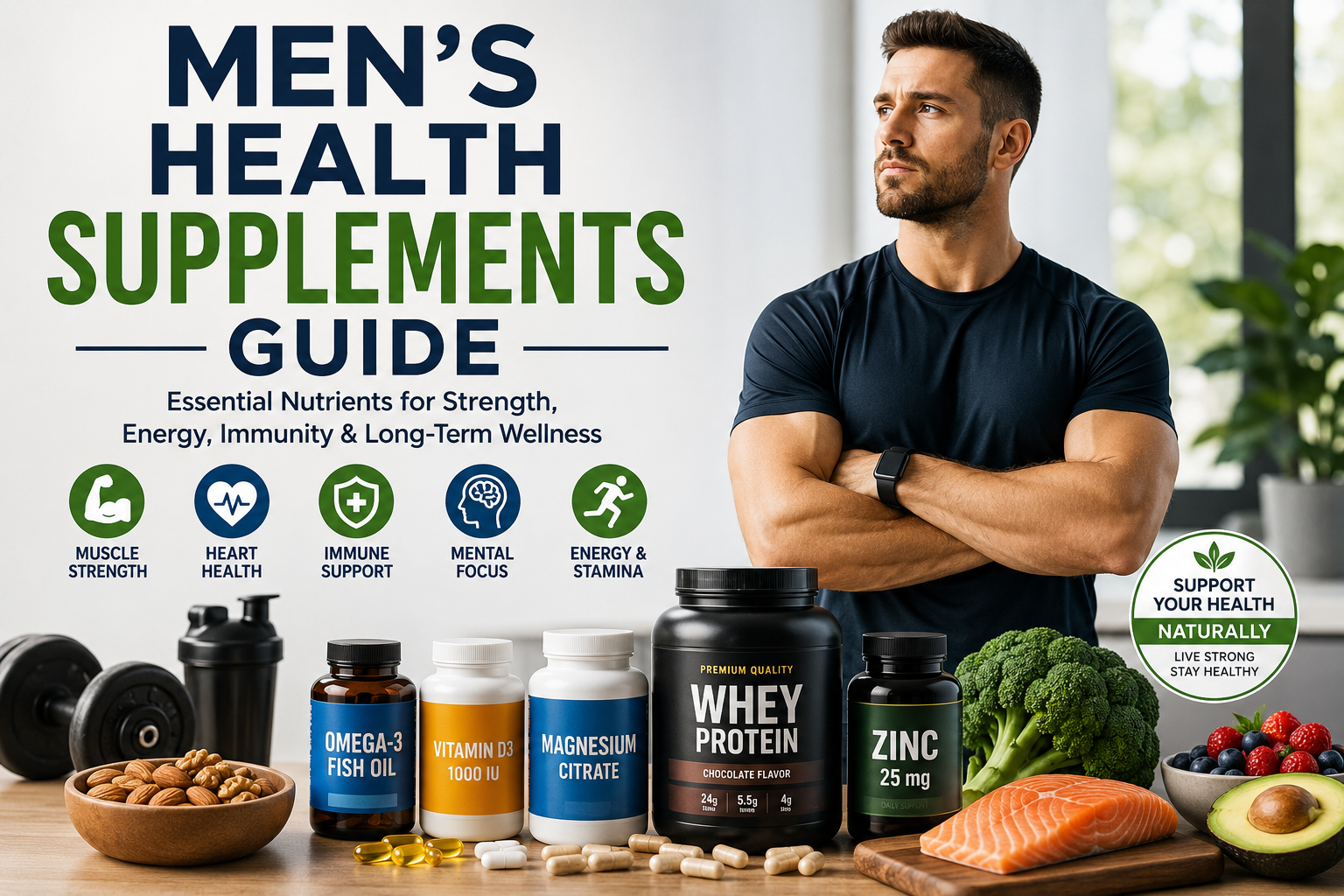
Men's Health Supplements Guide: Choosing the Right Nutrients for Every Stage of Life
Focus Keyword: Men's Health Supplements Guide
Meta Description: Discover the ultimate men's health supplements guide covering vitamins, minerals, protein, omega-3, probiotics, and performance supplements. Learn how to choose safe, effective supplements for energy, heart health, muscle growth, immunity, and healthy aging.
Men's Health Supplements Guide
Maintaining good health requires more than regular exercise and a balanced diet. Modern lifestyles, demanding work schedules, stress, and nutritional gaps can make it difficult for men to obtain every essential nutrient through food alone. A well-planned supplement routine can help support overall wellness, muscle recovery, heart health, brain function, immunity, and healthy aging when combined with nutritious eating habits.
This comprehensive men's health supplements guide explains the most beneficial supplements, their potential health advantages, who may benefit from them, and practical tips for selecting high-quality products.
Why Men Consider Health Supplements
Although whole foods remain the best source of nutrition, supplements can help bridge nutritional gaps that may develop due to:
Busy lifestyles
Poor dietary habits
Intensive exercise routines
Aging
Vegetarian or vegan diets
Medical conditions affecting nutrient absorption
Increased physical or mental stress
Supplements are designed to complement—not replace—a healthy diet.
Essential Vitamins Every Man Should Know Vitamin D
Vitamin D supports
Bone strength
Healthy muscles
Immune system function
Testosterone regulation
Mood support
Many adults spend limited time outdoors, making vitamin D deficiency relatively common.
Natural sources include:
Fatty fish
Egg yolks
Fortified dairy products
Sunlight exposure
Vitamin C
Vitamin C contributes to
Immune defense Healthy skin Collagen production Wound healing Antioxidant protection
Foods rich in vitamin C include:
Oranges Kiwi Strawberries Bell peppers Broccoli Vitamin B Complex
B vitamins play a major role in:
Energy metabolism
Brain health
Nervous system support
Red blood cell formation
They are especially beneficial for active individuals and older adults.
Important Minerals for Men's Health Magnesium
Magnesium supports:
Muscle recovery
Sleep quality
Nerve function
Blood sugar regulation
Heart health
Good dietary sources include:
Pumpkin seeds Almonds Spinach Black beans Zinc
Zinc helps support:
Immune health
Normal testosterone production
Reproductive health
Wound healing
Protein synthesis
Foods naturally rich in zinc include:
Oysters Beef Lentils Pumpkin seeds Selenium
Selenium functions as a powerful antioxidant that supports:
Thyroid function Immune health Cellular protection Reproductive wellness
Brazil nuts are among the richest natural sources.
Protein Supplements
Protein is essential for:
Muscle growth Exercise recovery Healthy aging Weight management Satiety
Popular protein options include:
Whey protein Plant protein Casein protein Egg protein
Choose products with minimal added sugars and transparent ingredient lists.
Omega-3 Fatty Acids
Omega-3 fatty acids are among the most researched supplements available.
Potential benefits include:
Heart health support
Brain function
Joint comfort
Eye health
Healthy inflammation response
Natural food sources include:
Salmon Sardines Mackerel Flaxseed Chia seeds Probiotics for Gut Health
A healthy digestive system affects many areas of wellness.
Probiotics may support:
Digestive balance
Nutrient absorption
Immune function
Regular bowel movements
Gut microbiome diversity
Combining probiotics with fiber-rich foods often provides the greatest benefit.
Fiber Supplements
Many adults consume less fiber than recommended.
Fiber supports:
Digestive health
Cholesterol management
Blood sugar balance
Healthy weight maintenance
Natural sources include:
Fruits Vegetables Oats Beans Whole grains Joint Support Supplements
Men who exercise regularly or experience age-related joint discomfort often consider:
Glucosamine Chondroitin MSM Collagen peptides
These ingredients may help support joint comfort and mobility when used consistently.
Heart Health Supplements
Cardiovascular health becomes increasingly important with age.
Common supplements include:
Omega-3 fish oil Coenzyme Q10 (CoQ10) Plant sterols Soluble fiber
These should complement—not replace—heart-healthy lifestyle habits.
Men's Performance Supplements
Fitness enthusiasts often use supplements such as:
Creatine monohydrate
Electrolytes
Protein powders
Branched-chain amino acids (BCAAs)
Essential amino acids (EAAs)
Creatine remains one of the most thoroughly studied sports nutrition supplements for improving strength and high-intensity exercise performance.
Brain Health Supplements
Supporting cognitive health is important throughout adulthood.
Common brain-support supplements include:
Omega-3 DHA B-complex vitamins Magnesium Choline
Adequate sleep, regular exercise, and mental activity remain equally important.
Immune Support Supplements
To help maintain normal immune function, men often choose:
Vitamin C Vitamin D Zinc Probiotics
Healthy sleep and balanced nutrition continue to be the foundation of immune health.
Healthy Aging Supplements
As men age, nutritional needs may change.
Frequently used supplements include:
Vitamin D Calcium Magnesium Omega-3 Protein Collagen CoQ10
Healthy aging also depends on physical activity, routine health screenings, and nutritious eating patterns.
How to Choose High-Quality Supplements
Before purchasing supplements, look for products that:
Clearly list all ingredients
Provide transparent dosage information
Avoid unnecessary fillers
Undergo third-party quality testing
Follow Good Manufacturing Practices (GMP)
Display expiration dates
Come from reputable manufacturers
Avoid products that promise unrealistic or instant health results.
Safety Tips Before Taking Supplements
Keep these precautions in mind:
Read product labels carefully.
Do not exceed the recommended serving size.
Inform your healthcare provider about all supplements you take.
Check for possible interactions with medications.
Store supplements according to label instructions.
Keep products out of reach of children.
Lifestyle Habits That Maximize Supplement Benefits
Supplements work best alongside healthy habits, including:
Eating a balanced diet
Exercising regularly
Staying hydrated
Sleeping 7–9 hours per night
Managing stress effectively
Avoiding tobacco
Limiting alcohol intake
Scheduling routine medical checkups
Frequently Asked Questions
Do men need daily supplements?
Not necessarily. Individual needs depend on diet, age, health status, lifestyle, and medical advice. Supplements should address specific nutritional gaps rather than replace healthy eating.
What is the best supplement for men's overall health?
There is no single best supplement. Commonly recommended nutrients include vitamin D, omega-3 fatty acids, magnesium, zinc, and protein when dietary intake is insufficient.
Can supplements replace healthy food?
No. Whole foods provide fiber, antioxidants, and a broad range of nutrients that supplements cannot fully replicate.
Are natural supplements always safe?
Not always. Natural products can still cause side effects or interact with medications. Use supplements responsibly and follow professional guidance when needed.
Which supplements support active lifestyles?
Protein powders, creatine monohydrate, electrolytes, and omega-3 fatty acids are commonly used by physically active men to support training and recovery.
Final Thoughts
A thoughtful supplement plan can help support men's health by filling nutritional gaps and complementing a healthy lifestyle. Rather than searching for a single "miracle" product, focus on evidence-based nutrients that align with your personal health goals. Pair supplements with balanced nutrition, regular physical activity, quality sleep, and routine preventive care to build a strong foundation for long-term wellness.