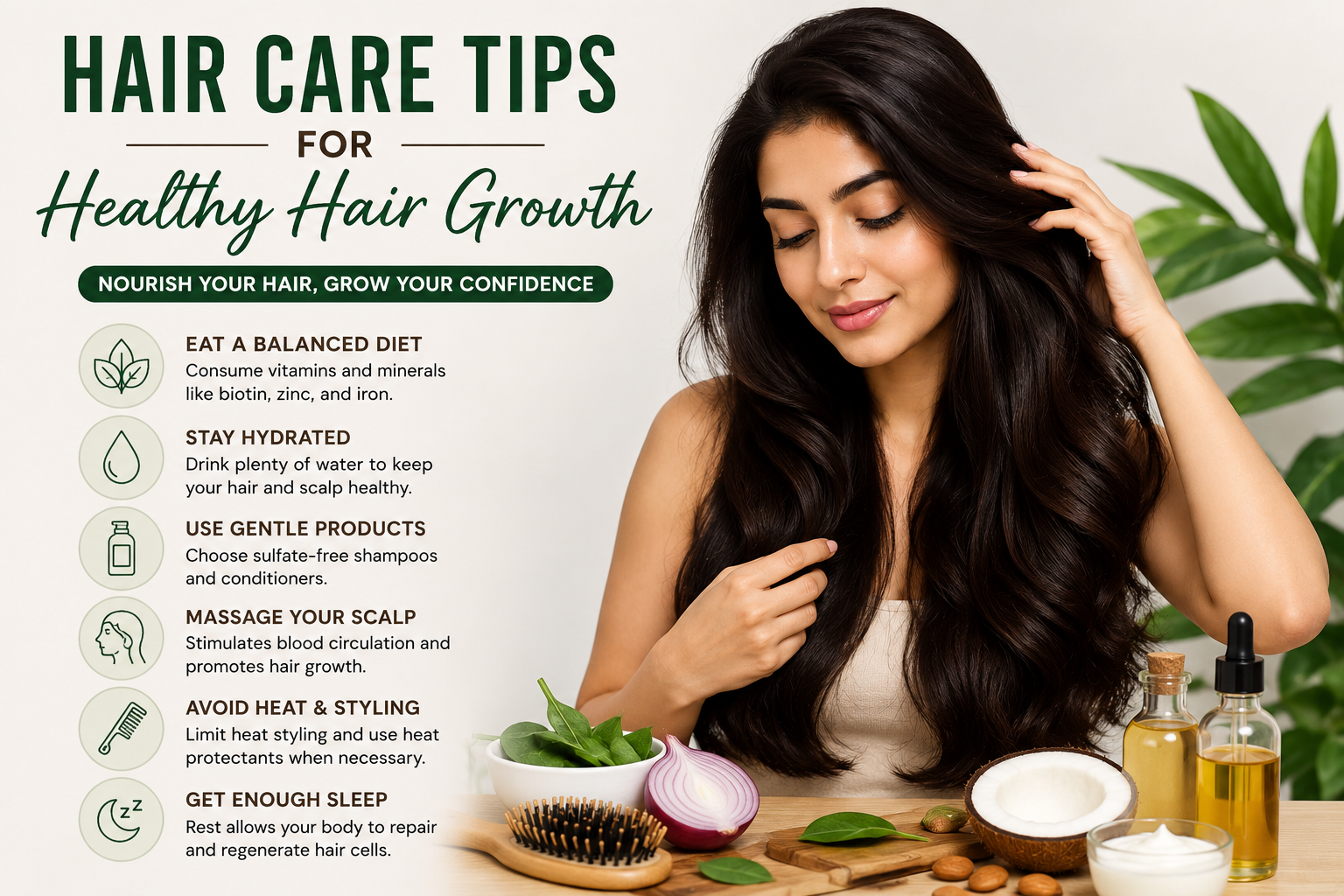
Hair Care Tips for Healthy Hair Growth: Expert Guide to Stronger, Thicker Hair
Healthy, beautiful hair starts with consistent care, proper nutrition, and choosing products that suit your hair type. Whether your goal is faster hair growth, reduced hair fall, or shinier locks, following the right hair care routine can make a noticeable difference over time. This comprehensive guide shares science-backed hair care tips that help maintain a healthy scalp, strengthen hair strands, and support natural hair growth.
Why Healthy Hair Care Matters
Hair grows from follicles beneath the scalp. When your scalp is healthy and your body receives the nutrients it needs, your hair has the best opportunity to grow stronger and healthier. While genetics play a role, daily habits, environmental exposure, and product choices significantly affect hair quality.
Common causes of unhealthy hair include:
Excessive heat styling
Chemical treatments
Poor nutrition
Stress
Hormonal changes
Hard water
Overwashing
Product buildup
A balanced hair care routine can minimize damage and improve the appearance of your hair.
Wash Your Hair According to Your Hair Type
There is no universal washing schedule.
Oily hair: Every 1–2 days
Normal hair: Every 2–3 days
Dry or curly hair: Every 3–5 days
Use a gentle sulfate-free shampoo whenever possible to avoid stripping your scalp of its natural oils.
Choose the Right Conditioner
Conditioner helps replenish moisture and protects hair from breakage.
Look for ingredients such as:
Argan oil Coconut oil Shea butter Keratin Panthenol Aloe vera
Apply conditioner mainly to the mid-lengths and ends rather than the scalp.
Feed Your Hair from Within
Healthy hair begins with proper nutrition.
Important nutrients include:
Protein
Iron
Zinc
Biotin
Vitamin D
Vitamin C
Omega-3 fatty acids
Vitamin E
Excellent food choices include:
Eggs
Fish
Lean chicken
Spinach
Berries
Greek yogurt
Nuts
Seeds
Avocados
Sweet potatoes
A balanced diet supports stronger hair growth naturally.
Massage Your Scalp Regularly
Scalp massage improves blood circulation around hair follicles.
Benefits include
Healthier scalp
Better nutrient delivery
Relaxation
Potential support for thicker-looking hair
Massage gently for 5–10 minutes several times each week.
Reduce Heat Styling
Frequent use of:
Hair dryers Curling irons Straighteners
can weaken hair proteins and increase split ends.
Whenever possible:
Air dry hair
Use lower heat settings
Apply a heat protectant before styling
6. Avoid Tight Hairstyles
Very tight hairstyles may stress hair follicles.
Examples include:
Tight ponytails Tight braids Tight buns
Switch to softer hairstyles whenever possible to reduce unnecessary tension.
Trim Split Ends Regularly
Hair trimming does not speed up growth directly, but removing split ends helps prevent further breakage.
A trim every 8–12 weeks helps maintain healthier-looking hair.
Protect Hair from Sun and Pollution
Environmental exposure can dry and weaken hair.
Protect your hair by:
Wearing a hat outdoors
Using UV-protective hair products
Washing away pollution after prolonged outdoor exposure
9. Use Hair Oils Wisely
Hair oils can improve softness and reduce dryness.
Popular options include:
Coconut oil
Argan oil
Jojoba oil
Rosemary oil (properly diluted)
Almond oil
Use small amounts to avoid product buildup.
Minimize Chemical Treatments
Repeated coloring, bleaching, relaxing, and perming may weaken hair over time.
If you chemically treat your hair:
Space treatments several weeks apart
Use deep conditioning masks regularly
Choose professional treatments whenever possible
11. Stay Hydrated
Water supports healthy skin, including the scalp.
Aim for adequate daily hydration based on your activity level and climate.
Manage Stress
Stress can contribute to increased hair shedding.
Helpful stress-management techniques include:
Walking
Meditation
Yoga
Deep breathing
Regular exercise
Quality sleep
13. Sleep on a Silk Pillowcase
Silk pillowcases reduce friction compared with cotton.
Benefits may include
Less hair breakage
Reduced tangles
Better moisture retention
14. Avoid Over-Brushing
Gentle brushing distributes natural oils throughout the hair.
Use:
Wide-tooth combs for wet hair
Soft-bristle brushes for dry hair
Avoid aggressive brushing, especially when hair is wet.
Keep Your Scalp Clean
A healthy scalp supports healthier hair growth.
Watch for signs such as:
Persistent itching Heavy dandruff Redness Excess oil buildup
If symptoms persist, consult a dermatologist for evaluation.
Natural Remedies That May Support Healthy Hair
Some people include natural ingredients in their hair care routine:
Aloe vera gel
Coconut oil
Rosemary oil (diluted)
Onion juice (limited evidence)
Green tea rinse
Rice water
Results vary, and these remedies should complement—not replace—a balanced hair care routine.
Common Hair Care Mistakes to Avoid
Many people unknowingly damage their hair by:
Washing too frequently
Using extremely hot water
Skipping conditioner
Sleeping with wet hair
Excessive heat styling
Ignoring scalp health
Using harsh chemical products
Brushing wet hair roughly
Tight hairstyles every day
Avoiding these habits helps maintain stronger, healthier hair.
Best Daily Hair Care Routine
Morning
Brush gently.
Protect hair from sun exposure.
Avoid excessive styling products.
Evening
Remove product buildup if necessary.
Massage the scalp briefly.
Apply lightweight oil to dry ends if needed.
Sleep on a silk pillowcase.
Weekly
Deep conditioning treatment.
Clarifying shampoo (if product buildup develops).
Scalp exfoliation when appropriate.
When to See a Healthcare Professional
Seek medical advice if you experience:
Sudden severe hair loss
Bald patches
Persistent scalp irritation
Hair thinning lasting several months
Excessive shedding after illness
Hair loss with fatigue or unexplained weight changes
Early evaluation may help identify treatable underlying causes.
Frequently Asked Questions What helps hair grow naturally?
A nutritious diet, proper scalp care, stress management, adequate sleep, and minimizing heat and chemical damage all support healthy hair growth.
How often should I wash my hair?
It depends on your hair type. Oily hair may require more frequent washing, while dry or curly hair generally benefits from less frequent washing.
Does trimming hair make it grow faster?
No. Hair grows from the scalp, not the ends. Regular trims simply reduce split ends and improve overall appearance.
Which vitamins support healthy hair?
Protein, iron, zinc, vitamin D, vitamin C, biotin, and omega-3 fatty acids all contribute to healthy hair.
Can stress cause hair loss?
Yes. Significant physical or emotional stress can contribute to temporary hair shedding in some individuals.
Final Thoughts
Healthy hair growth is built on consistency rather than quick fixes. A balanced diet, gentle hair care routine, regular scalp maintenance, and protection from everyday damage work together to improve hair strength, shine, and resilience over time. While no product can guarantee rapid hair growth, adopting healthy habits can create the ideal environment for your hair to thrive naturally.
By following these expert hair care tips consistently, you can enjoy stronger, healthier, and more manageable hair while reducing common problems such as breakage, dryness, and excessive shedding.